



Jumping Mouse
Dipodidae, also known as jumping pocket mice, belongs to the rodent order and rodent family. The jumping mouse has a medium to small body, a large head, large eyes, a short and wide snout, and long whiskers. The fur color is light, mostly sandy yellow or sandy gray, without luster; Close to the scenery of the habitat. Originating from southwestern Africa, it is widely distributed in arid and semi-arid regions of Asia, Africa, and Europe, living in the northern parts of North America and Eurasia, as well as in desert and grassland areas throughout China. Having a hibernation habit, one will find a hole to hide, build a nest, and then hibernate, using the fat accumulated in the tail to supplement the body's energy consumption during hibernation; It mainly eats plants and also preys on insects in summer.

Bumblebee
It is an insect animal of the order Hymenoptera and family Vespidae. Also known as wasps or wasps, there are a wide variety of species. The mouthparts are chewing and sucking, usually winged, and connected by a slender "waist" between the chest and abdomen. The female body has a terrifying sting. Wings are well-developed, flying rapidly. It is named after the yellow stripes on its body. Widely distributed around the world. It is a social behavior insect group with a preference for light and sweet substances. Within a range of 500 meters, wasps can clearly identify their direction and return to their nest smoothly. Tiancheng insects mainly feed on nectar, while young bees feed on other insects.

Hippopotamus
It is a semi aquatic mammal belonging to the family Hippopotamus in the order Artiodactyla. It is the largest omnivorous mammal in freshwater, with a huge body size and short limbs; Thick and sturdy head; The mouth is large and can be opened at a 90 degree angle; The front teeth and canine teeth of a hippopotamus are both fang shaped, with the lower front teeth extending parallel to the front like a shovel. The word hippopotamus means' horse in the river ', which is the Greek term for this powerful beast. Mainly distributed in tropical regions of Africa, it inhabits swamps and reed beds near rivers. They often live in groups, move around at night, soak in water most of the time, and have a gentle temperament. I have a huge appetite and mainly feed on aquatic plants such as reeds.

Terror bird skull
Dinornitidae is a bird species in the ostrich order of the terror bird family. The abdominal feathers are yellow, and the other parts are yellow and black in color. Enlarged body, degeneration of upper limbs, and short and thick lower limbs; The neck is covered with feathers and is relatively short; There are three toes. In 1843, it was named the terror bird by Owen, meaning a large bird that can scare people. Resting in the primitive lowlands and coastal forest grasslands of the southern islands of New Zealand. Living as a couple, each pair has their own territory. Cannot fly, runs slower than ostriches. They feed on berries, grass seeds, and roots, and sometimes also collect some insects. It is one of the largest birds on Earth.

Huangxiangliu Monkey Skull
The Saguinusimperator, a species of marmoset in the family Tamarix, is a type of marmoset monkey. He has two long white beards and is accustomed to sitting quietly together to eat and rest. Another way of saying it is called "Emperor" is because it resembles Wilhelm II of Germany. The fur is mainly gray with yellow spots on the chest. Living in the dense Amazon rainforest. Residing in the upper canopy of tropical rainforests or tropical forest grasslands, rarely active on the ground. Eat fruits, nuts, and other plant-based foods, as well as insects, spiders, frogs, small lizards, and bird eggs.

Trilobite Fossil
Trilobites are arthropods belonging to the order Tetraodontiformes in the phylum Arthropoda. The body is divided into three parts: head, chest, and abdomen; There is a carapace on the back, which is longitudinally divided into three pieces. The head is covered with a hard shell, called a cephalothorax; The central raised part of the head armor is called the head saddle, and the shape and size of the head saddle vary greatly depending on the type; The anterior part of the head saddle is the skull, on which there are eyes; There are also shells wrapped around the abdomen and tail. Named after the longitudinal division of the carapace on the back into three pieces. Widely distributed in ancient oceans, fossils are found on all continents today. I like to live in warm shallow sea areas and feed on algae, protozoa, and other organisms.

Soft shell glans bone
Soft shelled turtles, also known as soft shelled turtles, refer to aquatic turtles belonging to the order Turtles and family Turtles. Soft shelled turtles are distributed in freshwater streams and lakes in Asia, Africa, and North America. The characteristics of soft shelled turtles are a round, soft crust like pancake, webbed legs, a long head and neck, and nostrils located at the front of the fleshy long nose (female turtles are noticeably larger than male turtles). There are two main species of soft shelled turtles in the New World, the prickly soft shelled turtle and the smooth soft shelled turtle, whose dorsal shells are gray or brown. The smooth shell turtle has a shell length of about 35 centimeters, while the soft shell turtle has a shell length of about 45 centimeters, mainly distributed in the United States. There are two species of soft shelled turtles in the Old World: African turtles and Malay turtles.

Hamster skull
The Cricetinae subfamily is the smallest subfamily of the Cricetidae family, including only the Palearctic (Eastern Hemisphere) hamsters, which are small rodents. There are about 60 genera, with 3 genera and 9 species in China. Short and thick body shape; Short tail; Cheek pouch; Most types of skulls have no obvious ridges; The skull does not significantly enlarge; Listening to bubbles; Molar chewing mask with conical tooth tips. It inhabits a wide range of environments, including grasslands, deserts, semi deserts, farmland, and alpine grasslands. No hibernation habit; All of them are terrestrial species, mainly engaged in cave living, living by digging caves, with complex cave systems and specialized warehouses for storing food; Strong adaptability. Mainly feeds on plants, but also on animal carcasses.

Green iguana skull
The green iguana is an animal belonging to the genus of American green iguanas in the family Hymenonidae of the order Perciformes. Young green iguanas typically have a green body and use it to evade attacks from predators; As one grows older, green will gradually fade away and be replaced by colors such as light yellow, light blue, or brown; The main features of green iguanas include comb like scales on the back, black circular stripes on the tail, and large, drooping throat fans in adult males. Also known as: American Green Iguana. Distributed in tropical rainforest areas from Mexico to Paraguay in Central and South America. Omnivorous animals primarily consume small insects, eggs, and other animal based foods during their infancy, and eventually transition to plant-based diets in adulthood

Armadillo skull
Armadillo is a mammal of the family Armadillidae in the order Heterodontoides. The bone armor covers the head, body, tail, and outer legs. The bone armor in the head, front half, and back half is separated, and the bone armor in the body forms a band shape, allowing for flexible movement; Having sparse hair in areas of the body without bone armor; There are strong claws on the front foot. The armadillo is named after the nine layered ribbon on its body. Distributed in the southern tip of South America, the Caribbean coast, and the Central American continent, it often inhabits dense shrubs, grasslands, wilderness, and has strong adaptability. It is a burrowing animal that lives underground, crouching during the day and emerging at night. Its vision is poor, but its sense of smell is excellent.

Turtle skull
Pelodiscusssine is a reptile belonging to the family Turtles in the order Turtles, commonly known as turtle, grouper, water fish, turtle, and foot fish. It has an elliptical shape and is flatter than a turtle. They live in rivers, lakes, ponds, reservoirs and mountain streams, and hibernate at the bottom of the pool in winter. Xiyang is afraid of wind, Xijing is afraid of shock, Xijie is afraid of dirt, and Xidong and climbing are preferred. They move more frequently along the quiet, clean, and sunny waterfront. Soft shelled turtles have a wide and diverse diet, mainly consisting of animal based foods, as well as decaying plants and tender aquatic plants. They have strong hunger tolerance and are classified as ectothermic animals. Their feeding and growth vary with changes in water temperature.

Snapper skull
The Sparidae family refers to the phylum Chordata, suborder Vertebrates, order Perciformes, suborder Percoidei, and order Perciformes. The appearance of undergraduate fish is similar to that of the family Cichlidae or the family Percoidei, but the body size of the snapper is higher and more flattened; The incisors, canine teeth, and molars on both sides of the upper and lower jaws are relatively developed. The body is elliptical or oval in shape, with a large head and a higher front half. The back edge is curved, and the abdominal edge is relatively flat. As an important economic fish species along the coast of our country, it belongs to advanced edible fish. Likes to forage in small groups. Omnivorous, mainly feeding on benthic crustaceans, mollusks, echinoderms, or seaweed, occasionally preying on small fish. Androgynous and capable of sexual transformation.

African Warthog Skull
African wart pig (Phacochoerus africanus): also known as a common wart pig, weighing between 50-75 kilograms, named after the warts under its eyes, which may help protect its eyes when digging for food. The head is relatively large, accounting for one-third of the body length. Having a mane on the back. Four fangs, long and sharp. Living alone or in groups, skilled at digging caves. They feed on green grass, moss, and tubers, and occasionally consume carrion. Enjoy mud baths. Has strong survival ability, is very adaptable to high temperatures and dry environments, and can go without drinking water for several months in a row. Be aggressive and have a developed sense of smell.

High crowned chameleon skull
Chamaeleocalyptoratus is a type of chameleon named after the towering flesh crown on its head. It is one of the few species found in Asia, while the rest are mostly found in Africa, especially on the island of Madagascar. The high crowned chameleon is named after the towering, hat like crown composed of bone plates on their heads, and is a arboreal diurnal chameleon. The high crown chameleon adapts to a wide temperature range, making them the easiest chameleon species to breed. The main food of omnivorous species is insects, and most chameleons will develop anorexia towards a single food, sometimes refusing to eat until death.

North American opossum skull
Didelphis virginiana, a North American opossum, is a mammal belonging to the suborder Theropoda, order Notothenioidei, family Notothenioidei, and genus Notothenioidei. The only marsupial that inhabits north of the Rio Grande in North America. It is a solitary and nocturnal animal, about the size of a domestic cat. Their ancestors began to evolve in South America and entered North America 3 million years ago through the Great Migration of North and South American organisms. They usually appear in nearby cities. It is the largest member of the opossum genus and the largest member of the opossum order. They are generally 38-51 centimeters long and weigh 4-6 kilograms. Omnivorous, eating different types of plants and animals.

Mane lion lizard skull
Pogonavitticeps is a reptile of the genus Pogonavitticeps in the order Scorpaeniformes. The body of the maned lion lizard is thick and flat, covered with spiny scales on its back and neck, and the spines on its sides are arranged in a regular pattern in front of its forelimbs. When threatened, they will show off by opening their mouth and inflating their prickly throat to appear stronger and scare their opponents, hence the name. It is a semi terrestrial species that can move on flat ground or stay on rocks or tree branches. I have a preference for meat and occasionally consume plant flowers and leaves. Living in a high-temperature and dry environment. Mane lion lizards have a strong sense of class.

Fossil skull of terror jaw pig
The terror pig, also known as the terror pig, has a slightly larger body size than the giant pig and the complete toothed pig, and is an extremely large species in the giant pig family. Between 5 and 23 million years ago, the terror pig was the largest member of the Auchenipteridae family in history. It had huge tusks and jawbones, was an omnivorous species, and had a body size similar to that of a rhinoceros. It was more ferocious than modern wild boars and was named after its previous name, Dinohyus, which means "terror pig" in Greek. Their living habits are similar to those of ancient giant pigs and porcupines. The staple food of the terror pig is plants, but it also often eats decay or attacks small animals, as well as snatching food from small carnivores.

White egret skull
Egret is a medium-sized wading bird belonging to the family Egret in the order Characiformes. There are 13 species of birds in the genus Egret, among which the Big, Medium, Small Egret, and Snow Egret are all white in body feathers, commonly known as Egrets, and have a medium body size. Distributed in the Yangtze River Basin and other areas of China, as well as in Africa, central and southern Europe, West Asia, Central Asia, East Asia, Southeast Asia, Oceania and other regions. They inhabit lakes, ponds, estuaries, and other water bodies in low altitude areas, often gathering in small groups and active in shallow waters or riverbanks. They often forage in the water during the day and fly back to the forest to rest at night. White egrets prey on small fish, shrimp, frogs, mollusks, insects, and also peck at small amounts of plant seeds.

Negative rat skull
Didelphinae is a general term for mammals in the family Didelphinae, belonging to the marsupial order, and is a small to medium-sized mammal. Due to the fact that female opossums can carry their young around and run around, they are named "opossums". Has the largest number of teeth among living land mammals. Nocturnal, gentle temperament, often goes out at night, preys on small invertebrates such as insects and snails, and also eats some plant-based food. When threatened or injured, opossums will roar (especially males), pretend to be dead, and mimic the appearance and scent of sick or dead animals. He is known as the "brake man" because he suddenly stands still while running, confusing predators, and then suddenly jumps up to escape

Galapagos land iguana skull
The Galapagos land iguana (scientific name: Conolophussubicritatus) weighs up to 13 kilograms and measures 1 meter in length. The lower half is orange yellow, and the upper half is reddish brown. Due to the low corners, their appearance looks particularly foolish. The land iguana is distributed on six islands in the Galapagos Islands and is a unique species that evolved on the islands. The earthy yellow skin is designed to adapt to the color of sand and rocks. They mainly feed on cacti, which is related to the relatively dry climate of the Galapagos Islands. They choose to eat cacti because they can obtain the water their bodies need.

Macaque skull
Macaca (scientific name: Macaca) is a mammal belonging to the genus Macaca in the primate family. The body is thick and robust, with a smaller body size compared to other members of the same genus; Both hands and feet have 5 fingers and toes, with flat nails; The limbs are basically of equal length, and the thumb can be relative to the other four fingers; The distance between the eyes is narrow, and stereoscopic vision is developed, which can distinguish colors. It inhabits broad-leaved forests in tropical, subtropical, and warm temperate regions, living in clusters of 30-50 individuals. Omnivorous, feeding on wild fruits, leaves, insects, and also stealing crops such as corn and sugarcane. It is a relatively ancient primate and a rare animal in the Mulao ethnic region.

Upper skull of armadillo
Armadillo is a mammal of the family Armadillidae in the order Heterodontoides. The bone armor covers the head, body, tail, and outer legs. The bone armor in the head, front half, and back half is separated, and the bone armor in the body forms a band shape, allowing for flexible movement; Having sparse hair in areas of the body without bone armor; There are strong claws on the front foot. The armadillo is named after the nine layered ribbon on its body. Distributed in the southern tip of South America, the Caribbean coast, and the Central American continent, it often inhabits dense shrubs, grasslands, wilderness, and has strong adaptability. It is a burrowing animal that lives underground, crouching during the day and emerging at night. Its vision is poor, but its sense of smell is excellent.

Squirrel skull
Squirrels are mammals belonging to the family Squirrels in the order Rodentia. Squirrels have a slender body shape and longer hind limbs; There are no skin wings between the front and back limbs, and the limbs are strong and robust; The eyes are large and bright, the ears are long, and there is a bundle of hair on the tips of the ears, especially prominent in winter. Because it looks like a mouse and most of them like to gnaw on nuts such as pine cones, they are accustomed to living on trees, especially pine trees, hence the name. Widely distributed in Asia, North and South America, and Europe. Squirrels have diverse habitats. Active during the day, frequent in the early morning, with developed vision and hearing, no hibernation, and a habit of storing food. It is an omnivorous animal that eats a variety of plants and small insects.

Fossil upper skull of ancient giant turtle
The ancient giant turtle, the largest sea turtle in history. Also known as the Emperor Turtle, Ancient Turtle, Terror Turtle, Mock Turtle, or Ancestral Turtle, it is an extinct genus of sea turtle and the largest sea turtle in history. It is similar to the current leatherback turtles, both of which live in the sea. The body shape is very similar to that of today's sea turtles, with a beak that has huge biting power, and may feed on animals such as squid. The first fossil of the ancient giant turtle genus was discovered in 1895, and this fossil is very famous. On the one hand, it is huge, and on the other hand, it lacks a right hind foot, which is likely to have been bitten off by some giant predator.

Popular Models
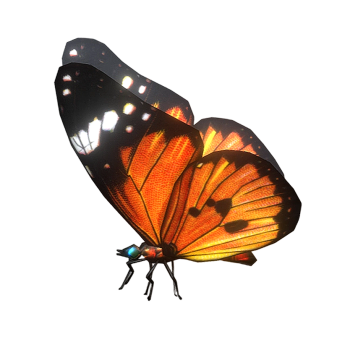
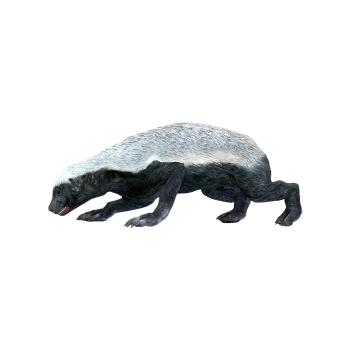
Honey Badger (3D animated model)
194 View
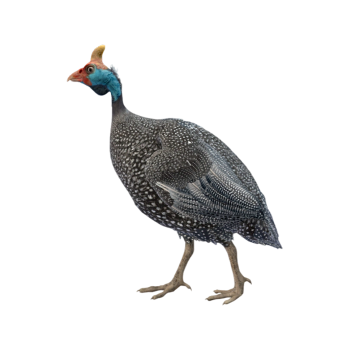
Guinea fowl (3D animated model)
165 View
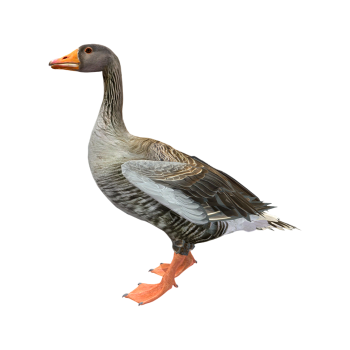
Wild Goose (3D animated model)
187 View
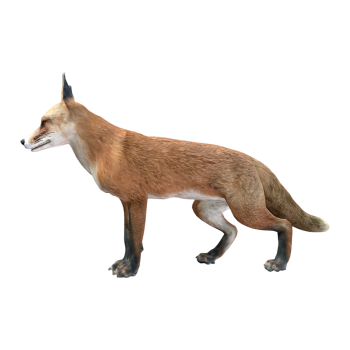
Red Fox (3D animated model)
155 View
Random Model

long neck medaka specimen
765 View

JBL Cylindrical Bluetooth Speaker
791 View

Lupine
515 View



Broken grain rotten Yan Jia
970 View

Apartment
642 View

Chinese yam
294 View

Ruins of Jizhou Ancient City
538 View